Output
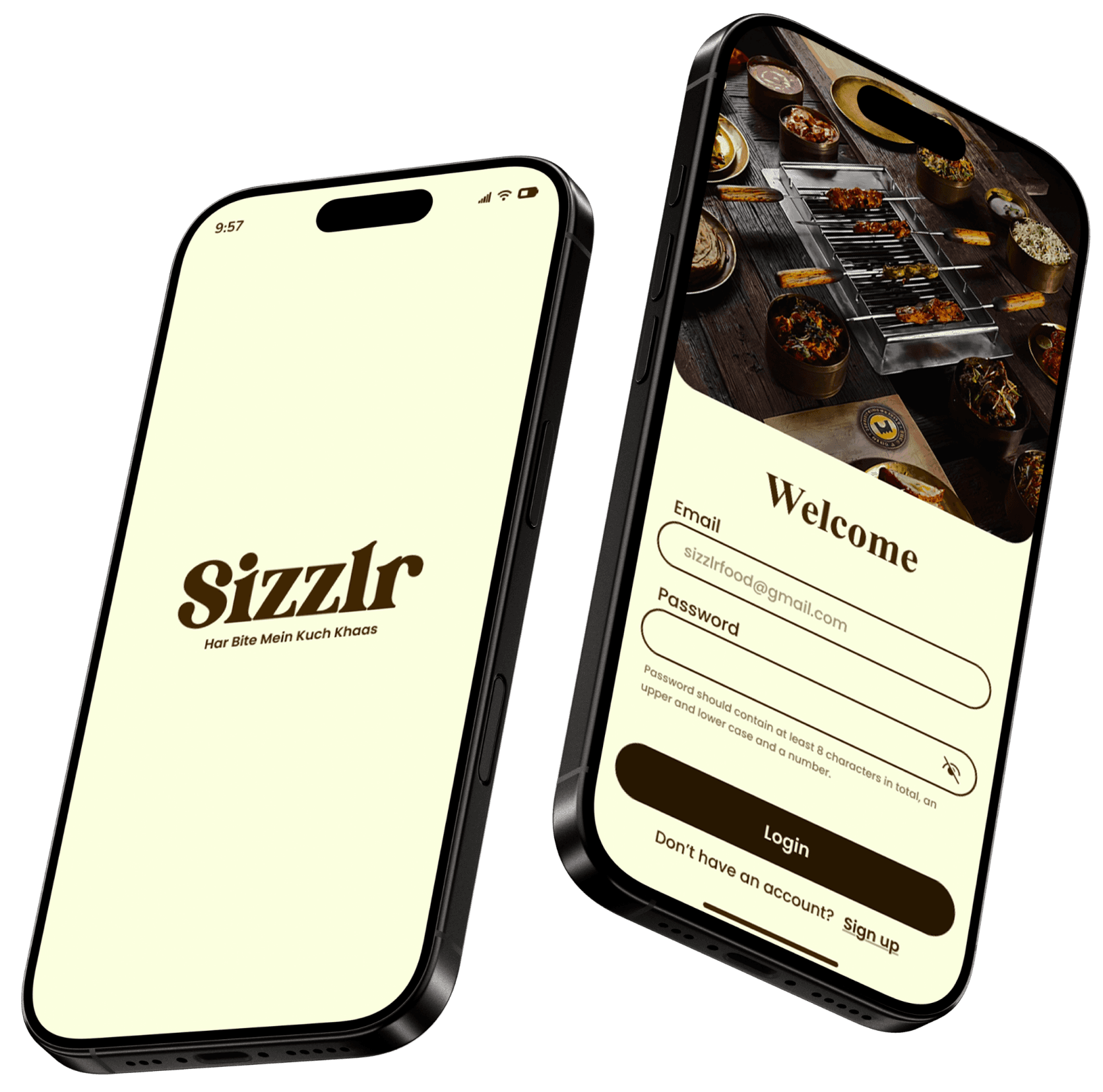
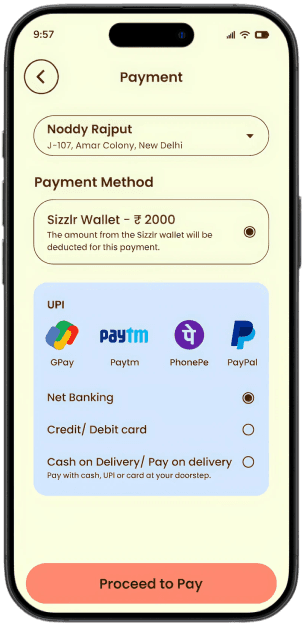
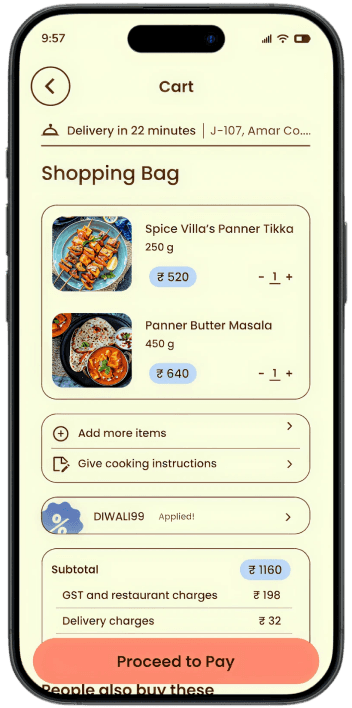
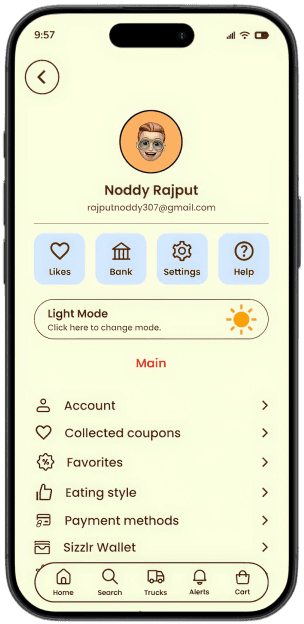
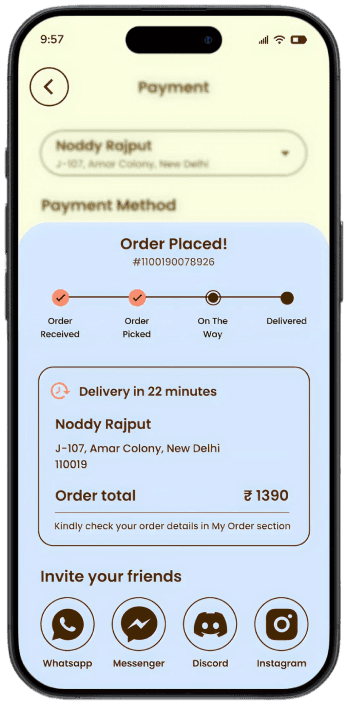
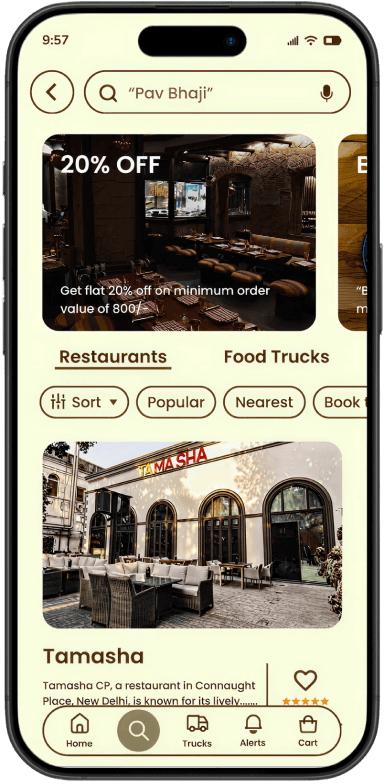
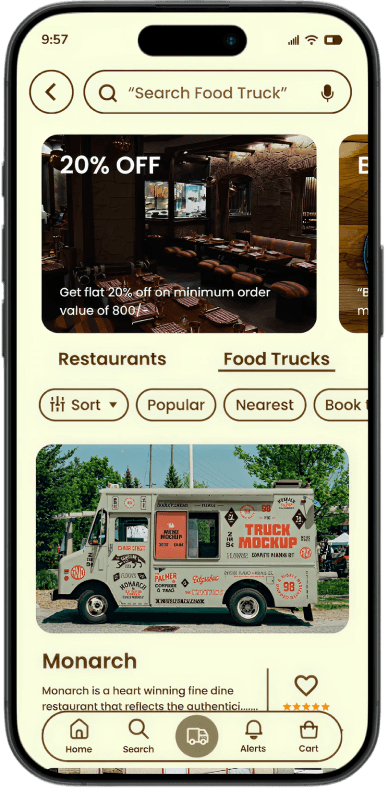
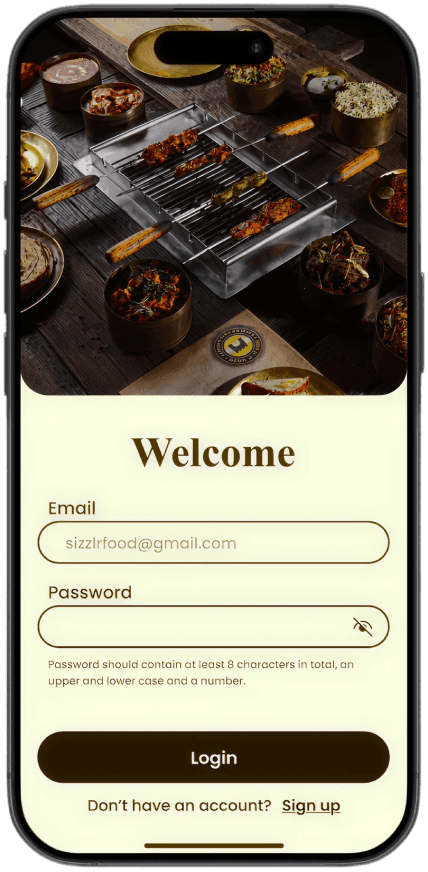
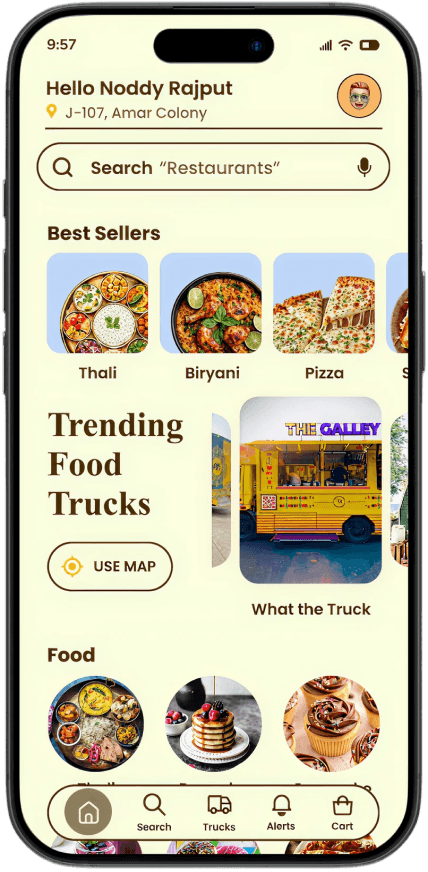
The output is a mobile-first food ordering app with a clearly defined information architecture, a focused feature set, and a UI system built around the brand's identity: bold, warm, and street-savvy.
Live GPS Tracking - Real-time location updates for food trucks so users always know exactly where to find them - or order for delivery.
AI Recommendations - Personalized meal suggestions based on user history, time of day, and nearby vendor availability.
AR Food Preview - Augmented reality feature that lets users visually preview dishes before ordering - building confidence and reducing returns.
Safety & Hygiene Display - Cooking temperature monitoring and hygiene ratings are surfaced at the vendor level - addressing the #1 trust barrier.
Flexible Payments - UPI, card, cash-on-delivery, and subscription plans (loyalty pricing) - designed to match how both users and vendors transact.
Research
Most users discover street food by physically
walking around — not through any app.
Top frustration: arriving at a stall to find it
closed, moved, or sold out.
Users are willing to pay a small delivery fee if
the vendor is trustworthy and nearby.
User Interviews & Surveys:
Most vendors have zero digital presence — no
social media, no listing, no website.
They rely entirely on footfall and word of
mouth to survive.Many are willing to use an app but only if it's
simple enough to set up in under 10 minutes.
Vendor Interviews:
The gap isn't technology - it's that no one has designed specifically for the informal food economy, where vendors
are mobile, menus are fluid, and trust is everything.
Zomato & Swiggy: built for restaurants, not
informal vendors. High onboarding cost
and complexity.No platform specifically addresses real-time
vendor location for mobile vendors.Gap confirmed: informal food sector is
entirely underserved by existing apps.
Competitor Analysis:
Location = the core problem. Without real-
time GPS, nothing else works.Trust is the conversion blocker. Users need
signals before they'll orderVendor onboarding must be near-zero effort
- or adoption fails.
Key Insights:
Goals
Bridge the Discovery Gap
Digitise Informal Vendors
Make Ordering Frictionless
Build Trust Through Transparency
Personalise the Experience
Target Audience
Sizzlr serves two distinct groups. The product only works if both sides find value - so the design has to address their needs separately, and connect them seamlessly.
Small business owners running food stalls or trucks. Low digital literacy, time-poor, cash-dependent.
Young adults (18–34) in cities who eat out frequently, value authenticity over chains and use mobile apps to discover and order food.
Working professionals and college students who rely on affordable nearby lunch options. They need speed, reliability and real-time awareness of what's available close to them right now.
Problem Statement
Existing food delivery platforms are built around restaurants - structured menus, fixed addresses, predictable hours. Food stalls and trucks don't fit that mould. They move, they change, they operate informally. Customers struggle to even find them, let alone order from them.
3.5+ food truck & stall vendors in India with no digital ordering
0 major delivery platforms built specifically for mobile vendors
68% customers can't locate their favourite stall on any given day
Inaccuracy and inconsistency in menu data
Product
Sizzlr - Expense Tracker App
Market
Food Stalls & Food Trucks
Platform
Android / iOS
Languages
English · Hindi
Sizzlr is a food delivery app that connects hungry customers with local food trucks and street stalls in real time - bringing the informal food economy online for the first time.
Sizzlr
Sizzlr
Food Delivery
PLATFORM